

Best Herbs to Grow on a Shady Balcony
What Counts as Shade on a UK Balcony
Shade is not one single thing, and knowing which sort you have makes choosing herbs far easier. A north-facing balcony that still catches open sky is usually light shade — bright enough for most leafy herbs, just without direct sun. A balcony that gets two or three hours of morning or late-afternoon sun is partial shade, and that opens up even more options. True deep shade, such as a recessed balcony under an overhang or a courtyard between tall walls, is the tricky one: growth will be slower and softer, but mint, chives and parsley will still manage.
Before you buy anything, spend a day noting where the light falls. Pale walls, light-coloured pots and a coat of white paint on a dark corner all bounce a surprising amount of light back onto your plants, which matters more on a balcony than in a garden.
The Herbs That Cope With Less Light
These four earn their place because they evolved on woodland edges or in damp meadow ground, not on sunny Mediterranean hillsides. Rosemary, thyme, oregano and lavender are wonderful herbs, but they want sun and sharp drainage — save them for a south-facing windowsill.
- Mint — the most forgiving herb you can grow in shade. Spearmint and apple mint are hardier and more flavourful than some supermarket varieties. Plant it in its own pot, always: it spreads by runners and will smother neighbours. A 10–15 litre pot gives it room to romp.
- Parsley — flat-leaf or curly, both happy in light shade. It has a long taproot, so choose a deep pot (at least 20cm) rather than a shallow trough. Seeds germinate slowly, often three to four weeks, so soak them overnight and be patient.
- Chives — tough, hardy and genuinely useful. A clump in a 5-litre pot will crop for years if you divide it every second spring. Snip stems down to about 2cm rather than plucking, and leave a few purple flowers for the bees.
- Rocket — fast, and better in shade than in full sun, where it bolts to seed in a heatwave. Sow little and often, roughly every three weeks from March to September, and you will have a steady supply of peppery leaves within four to six weeks.
- Chervil and coriander — worth adding if your balcony is genuinely shaded. Both bolt quickly in heat, so cool conditions suit them. Chervil is delicate and lovely in salads; coriander gives you leaves and, later, seed.
Pots, Compost and Drainage
Shade and wet compost are a dangerous combination, so drainage is your first priority. Every pot needs drainage holes, a layer of broken crocks or coarse grit at the base, and feet or blocks to lift it clear of the balcony floor so water can escape freely.
Use a peat-free multipurpose compost, or a loam-based mix for longer-term plants such as mint and parsley — it holds nutrients better and is less likely to slump. Add a handful of horticultural grit to the mix for rocket and chervil. Terracotta dries out faster than plastic; on a shady balcony that is often an advantage, but it is heavy, so check what your balcony can safely take and keep large pots close to the wall.
Watering in Shade: Less Often, But Never Bone Dry
Shaded compost loses moisture slowly, so it is easy to overwater. Push a finger 2cm into the surface before reaching for the can; if it is damp, wait. When you do water, water thoroughly until it runs out of the base, then empty the saucer after half an hour — never let pots stand in water, especially over winter.
Watering little and often is the common mistake in shade. It leaves the lower roots dry and the top permanently soggy. One good soaking every few days in summer is usually enough, and considerably less in spring and autumn. A thin mulch of gravel or bark keeps the surface tidy and stops liverwort forming on damp compost.
Keeping Them Going Through Cooler Months
Mint, chives, parsley and rocket are all hardy enough to weather a British winter outdoors, but balcony conditions are harsher than garden soil: wind chill, frost on the pot rim and roots freezing solid. Group pots together against a sheltered wall, raise them on pot feet and wrap the largest containers in bubble wrap or hessian if a cold snap is forecast.
Balconies under an overhang miss most of the rain, so check pots occasionally even in January — winter drought is a real cause of losses. Stop feeding from October to March; growth has slowed and unused nutrients will simply wash through. Chives will die back to nothing, which is normal — clear the dead foliage so slugs have nowhere to hide, and new shoots will appear in spring. Parsley is biennial, so sow a fresh pot each year to replace plants that flower and run to seed. Water sparingly in winter and never let mint sit in a waterlogged saucer.
Layout and Steady Harvesting
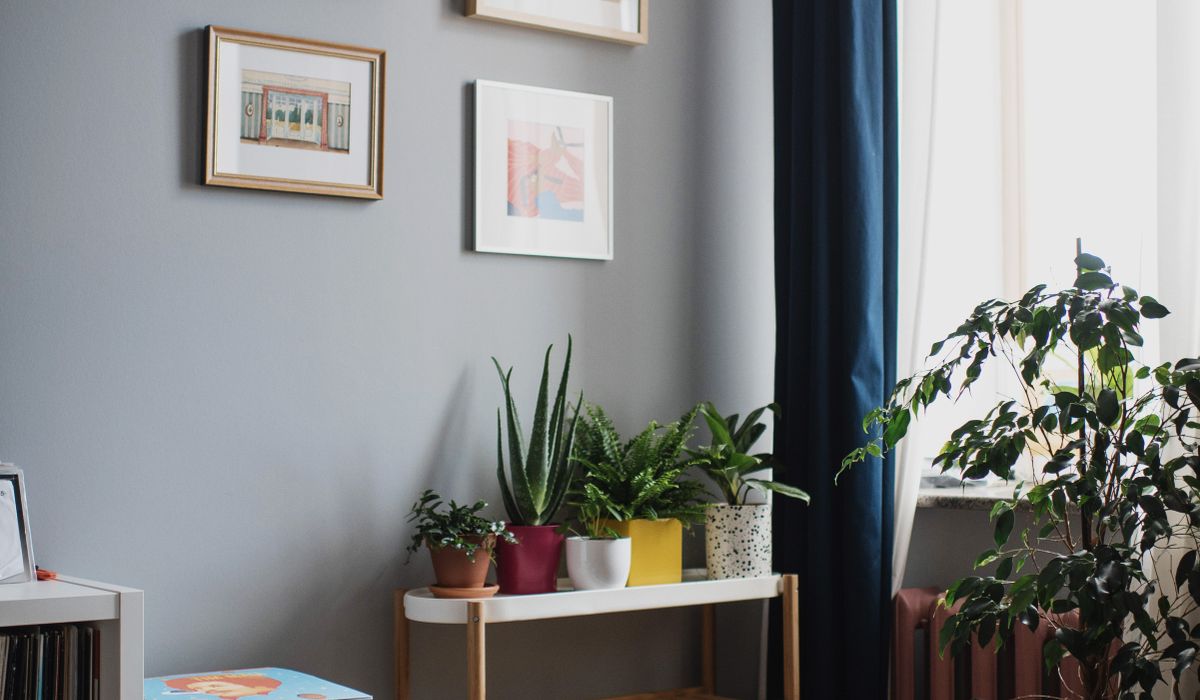
Make the most of limited floor space with a tiered shelf or a couple of sturdy wall brackets, putting the tallest pots at the back so nothing is overshadowed. Keep mint at the end of the row, out of reach of its neighbours' compost.
Harvest little and often rather than in one big cut. Regular picking keeps parsley and rocket leafy instead of leggy, and the more you snip chives, the thicker the clump becomes. A shaded balcony will never produce a Mediterranean herb garden, but with these four or five plants, a watering can and a bit of patience, you will be cutting fresh leaves for most of the year.


Decluttering
-
Use a slim desk, warm task lighting, and simple cable management to make a tiny workspace feel orderly and comfortable.


Small Gardens




-

Long established fact that a reader will be distracted
-

Long established fact that a reader will be distracted
-

Long established fact that a reader will be distracted




Storage Ideas
Karla Gleichauf
12 May 2017 at 05:28 pm
On the other hand, we denounce with righteous indignation and dislike men who are so beguiled and demoralized by the charms of pleasure of the moment
M Shyamalan
12 May 2017 at 05:28 pm
On the other hand, we denounce with righteous indignation and dislike men who are so beguiled and demoralized by the charms of pleasure of the moment
Liz Montano
12 May 2017 at 05:28 pm
On the other hand, we denounce with righteous indignation and dislike men who are so beguiled and demoralized by the charms of pleasure of the moment